
By Pam Wright
Local Journalism Initiative Reporter
You can’t kiss a cod at the Chatham-Kent & Lambton Children’s Water Festival.
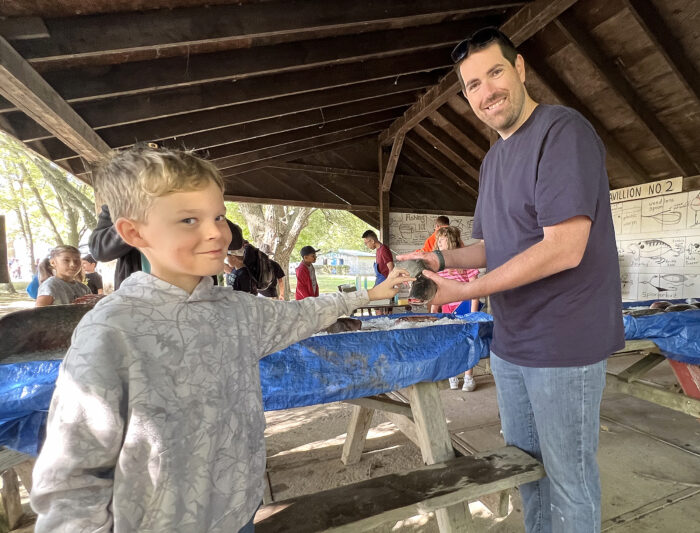
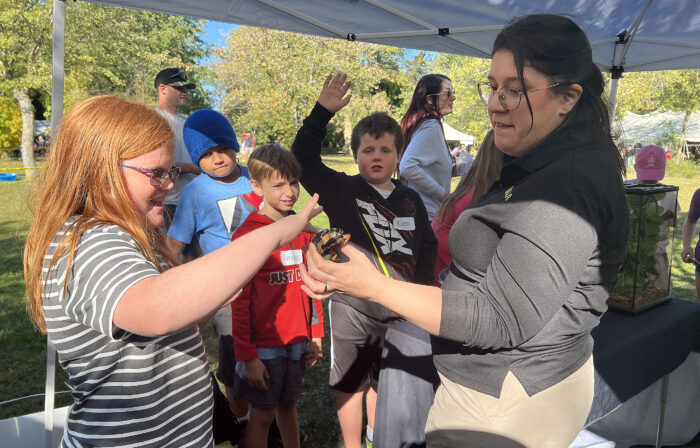
But you can touch a bowfin on its snout or pet an endangered spotted turtle.
Those two opportunities were among 43 interactive learning experiences offered to youngsters at the 14th annual festival. Hosted by the Lower Thames Valley Conservation Authority at C.M. Wilson Conservation Area over three days last week, the festival saw a new record with 2,230 students attending in the picture-perfect weather.
According to festival steering committee chair Glenn Smith, the event covers five different themes about water, including science; technology; conservation; protection; and attitude.
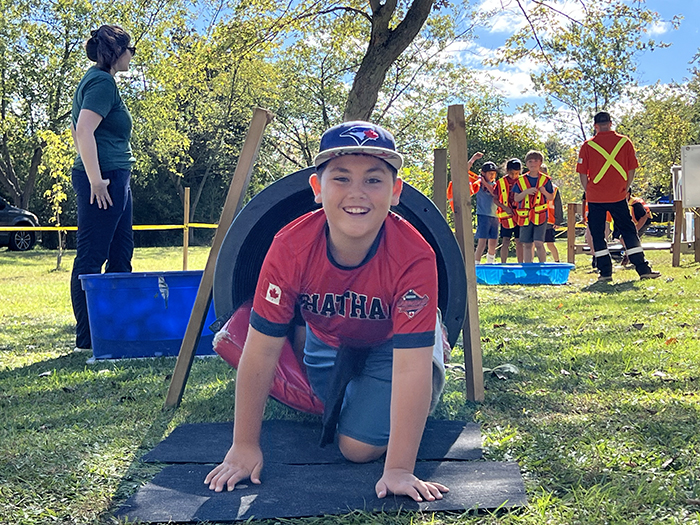
The long-time festival volunteer said watching children learn in an outdoor environment is satisfying.
“It’s great to see them learning something that will last a lifetime,” Smith said, adding the programs dovetail with the Ontario school curriculum.
“We want to make sure that when they go back to the classroom, they take the learning with them,” he added.
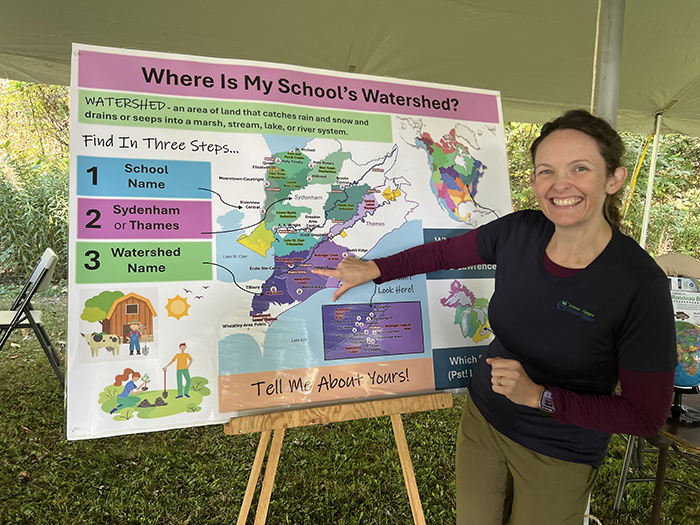
The LTVCA added a new exhibit this year to showcase which part of the watershed the various schools are located in, demonstrating how water flows in the Great Lakes Basin.
“The idea is to orient kids as to where they are in the watershed, specifically where their school is located ” LTVCA geographic information systems water technician Sarah Rabideau explained.
“So, all throughout the year, when it’s raining or snowing, they have an idea where that water is going,” she added, noting the display helps youngsters understand their impact on the watershed.
“They care about these things when they know a little bit more about it,” Rabideau said. “Half the battle is knowing where you’re at and you can take the rest from there.”
While most of the participating schools are within the Thames River watershed, others are located in the Sydenham River watershed and the St. Clair River watershed, she said.
LTVCA chief administrative officer Mark Peacock, who was also on hand, said raising awareness about the importance of protecting water is critical, as some 40 million North Americans depend on the Great Lakes Basin for water.
“If the watersheds of the Great Lakes were a country, it would have the third largest economy in the world,” Peacock said.
A total of 31 schools from all four local school boards participate each year. The festival also serves as a spot where high school students are mentored to lead various displays, many of whom attended the event as children.
The festival’s steering committee is also responsible for raising cash to make the event happen.