


By Pam Wright
Local Journalism Initiative Reporter
The goalposts keep moving.
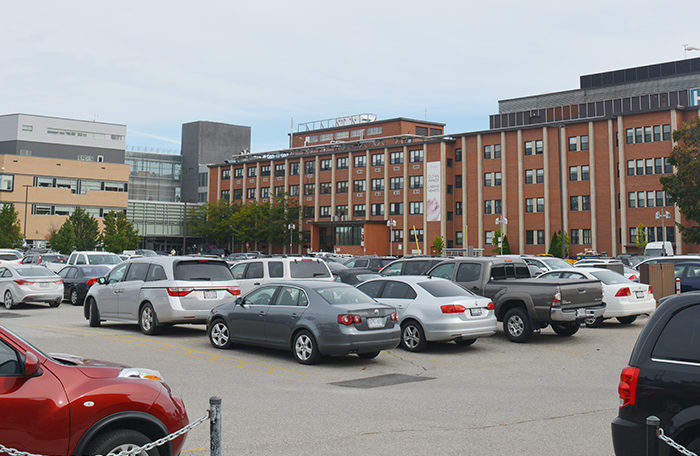
Chatham-Kent council voted to revisit the issue of encampment setbacks at its Aug. 25 meeting, agreeing to change the setback of tents from 100 metres to 25 metres from a private residence or business.
The revised protocol and bylaw allows the existing encampment at the Chatham-Kent water treatment plant on Grand Avenue East to remain as is, while opening up other sites, such as the Irwin Street water tower site.
This comes after council met Aug. 11 and changed the setbacks from 10 metres to 100 metres.
The latest decision was reached following a presentation from C-K housing services director Kim Crew, input from legal services director Dave Taylor and 30 deputations detailing both sides of the issue.
Based on Ontario case law, council heard that, under the Canadian Charter of Rights and Freedoms, the unhoused must be allowed to shelter on public lands if shelter beds are not available to them.
According to Crew, a balance must be struck between the rights of people living in neighbourhoods and the unhoused.
“The reality of people sleeping outdoors is here to stay,” Crew said. “We do not have enough shelter spaces.”
Data shows there are currently 80,000 homeless people in Ontario and the number is expected to grow to 300,000 by 2035.
In his comments, Taylor urged caution, citing several legal decisions in Ontario where municipalities were stopped from removing encampments based on the rights of the homeless living there.
Removing or prohibiting them violates the charter as it affects the “life, liberty and security of the person,” Taylor explained, noting it is a “very, very tough message, but an important one.”
Plus, he added, restrictions allowing only one property as an encampment isn’t advised, as that would mean the municipality is sanctioning a single encampment location.
North Kent Coun. Rhonda Jubenville, who brought the motion forward to change the setbacks, said that while she does not agree with encampments, the municipality has no choice.
“Based on legal knowledge that has been presented to council and the public tonight, removing encampments in Chatham-Kent is not an option,” Jubenville said, noting sanctioning one site is not a solution.
“Clearly there is no win or no quick fix to this dire situation, as we have all discovered over the past few weeks,” Jubenville stated, noting she sympathizes with both sides.
The councillor acknowledged C-K must balance the rights of housed residents with the rights of encampment dwellers.
“Encampments are not the answer…I personally would like to vote for removal of encampments. I find they are breeding grounds for enablement, but unfortunately as we have heard tonight, we cannot vote this way or we will face a Charter challenge.”
West Kent Coun. Melissa Harrigan, who seconded the motion, said the issue needs to be addressed from a policy perspective, noting smaller C-K communities will likely face encampment issues in years to come.
Under the new rules, council voted to spend up to $100,000 per exempted site on items such as waste disposal and fencing, with the money coming from the housing services operational reserve.
In addition, council approved hiring Royal Protective Services at a cost of $238,882 to monitor the encampment sites, but how this will roll out is still in the works.
The four-hour Aug. 25 meeting was the third straight meeting where the topics of encampments, mental health and addictions dominated the session. Council chambers were packed and more than 400 people watched the proceedings on YourTV.
A majority of the deputations on the night urged council to move the encampment away from the Grand Avenue East property.
Others asked that the encampment be moved to the Chatham water tower site on Irwin Street, and a few implored council to exempt the Thames Grove Conservation Area as a possible location.
Crime, a drop in property values, feeling unsafe and enabling addiction through harm reduction were among the issues brought forward by citizens.
Others affirmed the benefits of harm reduction carried out by agencies such as R.O.C.K. Missions, with one mother saying harm reduction protocols helped save her son’s life and he now has six months of sobriety.
However, another mom said she is taking legal action against R.O.C.K. Missions for enabling her daughter to continue on in her addiction.




Every tax paying Canadian Citizen should be guaranteed safe food, shelter and clothing. After Canadian families have paid millions of dollars in taxes, and served Canada 🇨🇦 in peace time and in war time, their family members deserve at least a bare minimum of guaranteed safe food, shelter and clothing.
Except most of them are NOT taxing paying citizens
Most of them were likely tax payers before they became homeless.
Not true. Every time they purchase something they are buying. The money they have or being given IS their money as a Canadian right. No different than subsidies, grants, gifts, and any other monies not labor earned.
But they aren’t tax paying and with yet more property taxes yes there will be more homeless more crime … I do sympathies but I’m hoping more people just making it don’t have to pay the price . It won’t affect those with higher incomes so they will be unconcerned with lower income people adding to the numbers .Unpopular opinion maybe but it’s my opinion.
Read my above comment. They are citizens. We have subsidies, and support. Those kinds of monies are income and for the individual.
I’m happy to hear Chatham is doing something for the people. And letting them have a tent. Windsor does not allow tents and there laying all over the sidewalks. Floors. Behind store. Decussing. Wake up windsor help them.
Most of them don’t pay taxes and why are the homeowners footing the bill.
How not? Any money towards helping them is taxed, as in food, meds, etc
That’s how we support businesses, no difference.
240k a year to ROCK missions from the municipality, 100k per site for water, waste and fencing, almost 240k to monitor the encampment… if only all the money being spent on homelessness could be spent to actually get the people in the encampment somewhere to live 🤔
It appears the issue of homelessness will never disappear. Thus as a society, we are compelled to find more humane and permanent Solutions than shuffling these individuals around. Converting appropriate unused buildings such as schools or churches into communal living spaces that provide a permanent roof over their heads would seem to be the best answer in my opinion. Individuals suffering deeply from economic hardship, and often accompanying mental health struggles and addiction problems, should be accommodated in respectful real life ways that also consider the rights of homeowners and taxpayers.
The same rights that gave you the abilities to thrive and prosper ARE everyone’s rights. We all have different achievement levels for it, so we’re not all doctors, scientists, bankers, lawyers, etc who may look down on others who don’t have what they have and would consider themselves higher than the *other people* and exclude them in their circle….that’s what so many of you are actually saying in a different snobby way. They are worthless if their down on their luck, and not at worthy like you. Sad you can’t hear your attitude.