

But people too often don’t utilize it
By Pam Wright
Local Journalism Initiative Reporter
The executive director of the Westover Treatment Centre says local resources are in place to help the addicted in Chatham-Kent.
But it doesn’t mean the folks who need them will use them.
“A lot of people have no desire to get into recovery just because the services are there,” Laird Brush told The Voice in a recent interview, stressing it’s “naive” to believe every addict or alcoholic wants help.
The comments from Brush come in response to a motion that was expected to be brought forward to Chatham-Kent council by North Kent Coun. Rhonda Jubenville Aug. 25. The motion is requesting that municipal staff investigate ways to improve treatment options for C-K residents – with the goal of helping circumvent lengthy wait times.
The result of the meeting was not known by press time.
The motion from Jubenville, who has been working on the matter with South Kent Coun. Ryan Doyle, comes on the heels of two lengthy council meetings where the subjects of addiction and homeless encampments have dominated. Both issues have been front and centre since the encampment in downtown Chatham relocated to the C-K Public Utilities Commission property on Grand Avenue East in July.
Brush, who has been at the helm of Westover since 2020, said the 30-bed substance use disorder program isn’t always full, as people don’t show up or get sent home after testing positive for drugs when they arrive.
Wait times for the 24 provincially funded beds at Westover range from six to eight weeks, while the wait for a private bed is three to four weeks. Cost for a private bed is $10,000, and there are six available.
When speaking to the issues of homeless encampments and social disorder, Brush said the problem is extremely complex, encompassing the issues of mental health, addiction and deep poverty.
It should be noted, he added, that not everyone living in the encampments is affected by all of those issues.
“There’s not an easy answer,” Brush said regarding a solution to the problem, noting the province’s decision to close psychiatric hospitals (such as the now-levelled Southwest Regional Centre in Cedar Springs) putting the mentally ill on the streets has been growing for decades. The move to deinstitutionalize care for persons facing intellectual disabilities started in the 1970s-80s, accelerating in the 1990s under the Mike Harris government.
“It took a long time to get to this point,” Brush said.
Traditional methods of dealing with addiction through harm-reduction means, such as handing out needles and naloxone kits, isn’t helping either.
Instead, Brush said, it keeps people sick.
“We’re enabling addicts to use and we’re keeping people stuck in their addiction,” he said. “It’s keeping people alive, but it doesn’t help them live.”
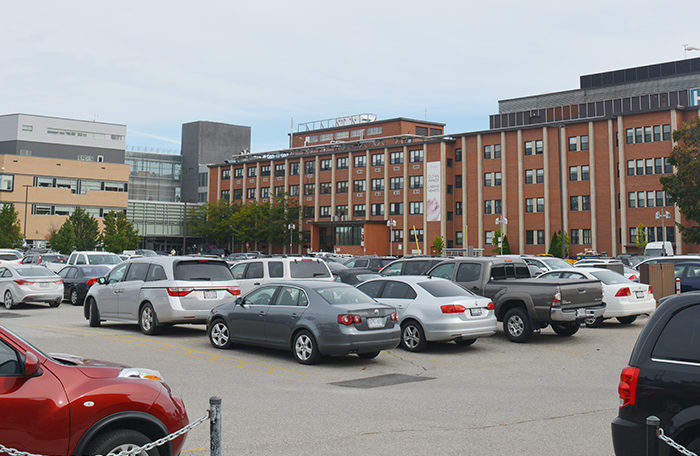
At the Chatham-Kent Health Alliance, where many start their recovery, services are in place. Meant to be easily accessible, the Rapid Access to Addiction Medicine (RAAM) Clinic has been providing a range of psycho-social supports for seven years.
Ten beds in withdrawal management services where people can safely detox from substances have been operational for the past three years.
A stay in the withdrawal management unit normally lasts three to 10 days, depending on the substance.
According to Caen Suni, CKHA vice-president of clinical programs and operations, people seeking help can self-refer by calling 519-352-6400 ext. 6740.
“We are meant to be low barrier and we have capacity,” Suni explained, noting the services are there if people are willing.
Westover Treatment Centre in Thamesville currently offers a 19-day co-ed residential treatment program for substance use disorder; a seven-day residential program for relapse prevention; a six-day residential program for family and friends affected by someone with addiction and a 24-hour crisis line that runs 365 days a year.
Treatment options in Windsor are open to Chatham-Kent residents as well, including the House of Sophrosyne, which offers residential treatment for women.
In Chatham, Journey Recovery Home offers faith-based residential treatment for up to 12 men, covering a range of modalities including cognitive behaviour therapy and life skills programming.
A third private treatment centre located near Rondeau is in the works. When it opens, it will provide co-ed residential treatment for up to 10 residents.
Plenty of assistance is also available through the Canadian Mental Health Association at 240 Grand Avenue West in Chatham, Monday to Friday from 8:30 a.m. to 5 p.m.
CMHA services, which include partnering with other agencies, provide first point-of-contact crisis intervention, mobile health care and addiction and housing supports with the goal of providing continuum of care.
The CMHA crisis intervention line can be reached at 1-866-299-7447.