
By Pam Wright
Local Journalism Initiative Reporter
Aquamation, also known as cremation by water, will soon be available to residents of Chatham-Kent.
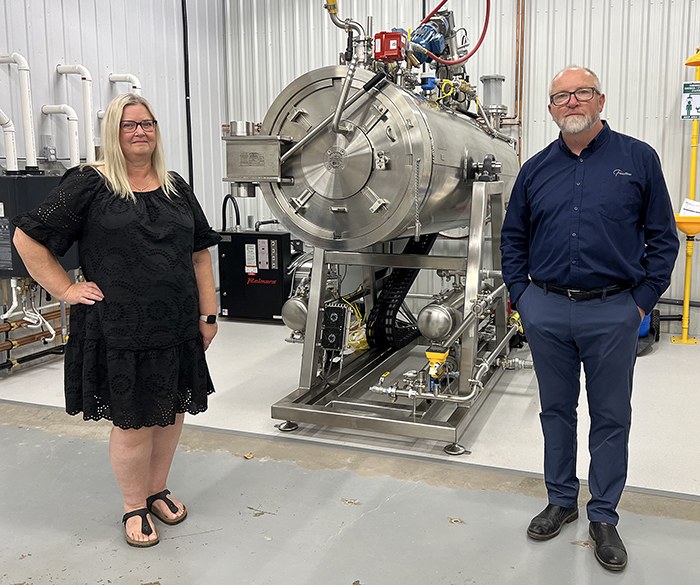
Offered by Life Transitions Burial and Cremation Service, the service uses a method called alkaline hydrolysis – a process using water and heat for the disposition of a deceased person. Inside a stainless-steel vessel, a body is broken down in just three hours’ time, leaving behind bone that when processed is similar to the remains of a fire cremation.
According to Life Transitions co-owner James MacNeil, aquamation uses 95-per-cent pure water with about five per cent alkalide – an added amount of potassium hydroxide dependent on the weight of the deceased. Potassium hydroxide is a common substance found in many household products including soap and shampoo, MacNeil added, noting it alters the PH level.
The fully automated machine, with a 500-pound door similar to a submarine, utilizes hundreds of sensors and incorporates pressure and water flow.
Aquamation is more environmentally friendly than regular cremation and burial, as the water left behind is sterile, pathogen free and contains no DNA. The by-product is then returned to the eco-system.
“It’s viewed as gentler and it seems more natural,” said Lee-Ann Peters-MacNeil, Life Transitions co-owner. “The water process significantly reduces energy use and emissions and minimizes the use of chemicals.”
Chatham’s aquamation machine is one of six in the province and the only one in southwestern Ontario, with the closest located in Peterborough.
The process garnered some international fame in 2021, when South African Bishop Desmond Tutu chose aquamation when he died.
Life Transitions is currently working to complete the installation of the unique machine with the hopes it will be operational by summer’s end.
“Once we’re up and running, we’ll be able to offer this to all of our clients, if they wish,” James explained. “You have choices and this is an extension of that.”
In parts of the U.S., aquamation has been used for years.
“We’re just offering something that’s tried and true and tested,” James explained, noting alkaline hydrolysis has been used for at least 40 years by medical universities in the United States such as UCLA, the Mayo Clinic and the Centres for Disease Control and Prevention.
Currently, aquamation is legal in most of central and western Canada, but not in Atlantic Canada. In the United States, it’s been approved in 31 states, but not in Indiana where the machines are built. It was approved in Ontario in 2014.
The process is gaining in popularity, the MacNeils said.
“The transition from flame to water is already happening as we speak,” James added, with some funeral services in the U.S. going strictly to aquamation.
According to both owners, the Chatham-Kent Public Utilities Commission has been working hand in hand with Life Transitions to ensure the process falls in compliance with regulations.
“They were very helpful at the PUC,” Lee-Ann explained. “They did their research.”
Getting the machine to Canada is the result of a year-long process the MacNeils said, noting there were many regulatory hoops to jump through.
But they had a lot of direction from funeral services already using aquamation – including the one in Peterborough.