By Kim Cooper
Is the work you do every day sometimes taken for granted? If so, consider the job of the honeybee. They are very much taken for granted.
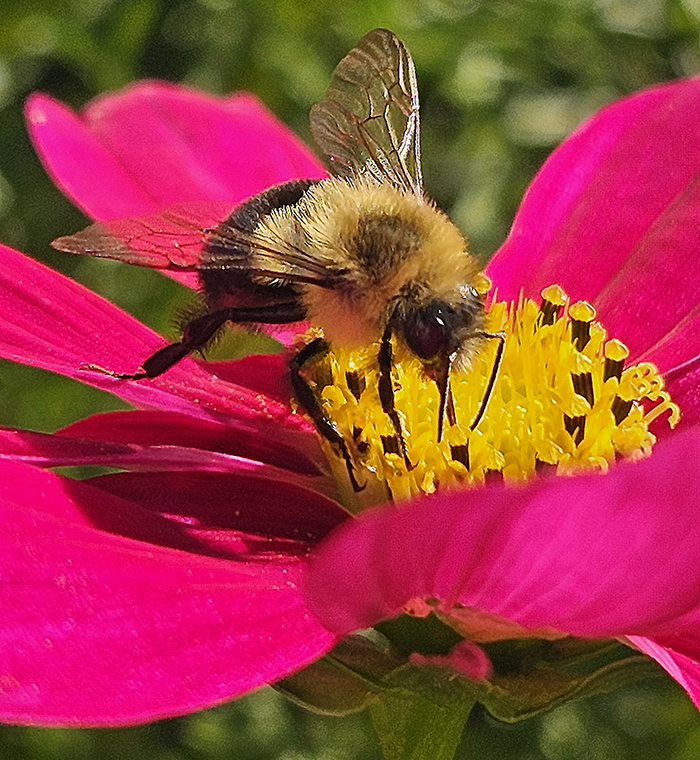
We all know honeybees gather nectar to produce honey, but they perform another vital function — pollination of agricultural crops, home gardens, and orchards.
As bees travel in search of nectar, they transfer pollen from plant to plant. This fertilizes the plants and enables the them to bear fruit.
Approximately 30 per cent of the human diet is derived from insect-pollinated plants and the honeybee is responsible for 80 per cent of this pollination!
Bees collect pollen and nectar. Pollen is a very high-protein food for bees. Plants give up some pollen in exchange for the bees’ services in transferring pollen from other plants.
Nectar is sucked up through the bee’s proboscis, mixed with enzymes in their stomach, and carried back to the hive, where it is stored in wax cells and evaporated into honey.
Some bees tend to stay with a specific type of flower. For example, a honeybee that visits an apple blossom on its first flight, will usually visit only apple blossoms until there are no more, and then they would move on to another flower.
Did you know the honeybee is the only insect in the world that makes food for humans?
So, if you happen to see honeybees during a summer outing, don’t be so hard on them. They are not out to get you.
Their stinger is simply a defense mechanism. Their main focus is to get nectar and spread pollen, not to sting you.
There are a growing number of local honey operations in Chatham-Kent and Essex County where you can purchase honey products. Don’t forget to check the Buy Local Buy Fresh map for information on these locations.
Why should you buy local honey? Some say local honey will cure your seasonal allergies; others say it’s just plain good. Whether you want to reduce your carbon footprint or support local agriculture, buying honey, made by bees in your own area, is a good thing to do.
But there’s another reason you should purchase locally made honey — your own safety.
International honey launderers, not to be mistaken for money launderers, sometimes ship contaminated honey from overseas and may falsify shipping labels and documents.
These barrels of honey travel to one of several countries, where they are relabeled and reshipped to North America, to be distributed by packing companies unaware of its true origin.
The honey you purchase in your grocery store may be labeled as a product of countries such as Australia, Thailand, or India, but there’s a good chance the honey came from China.
This is even more reason to support our producers by purchasing local honey, which is delicious, safe and helps our local economy.
Remember to always check labels when you buy any food product.
Think about this – Be joyful in hope, patient in affliction, and faithful in prayer.
Just some bee-eautiful food for thought.
Kim Cooper was involved in the agribusiness sector for over 45 years. He can be reached at: [email protected]