
By Pam Wright
Local Journalism Initiative Reporter
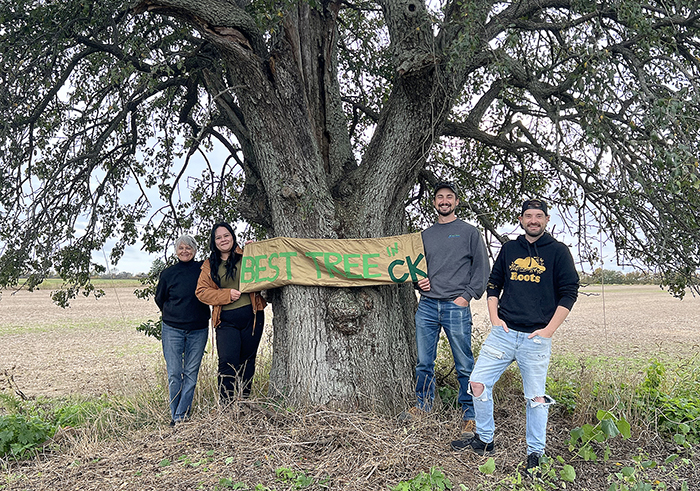
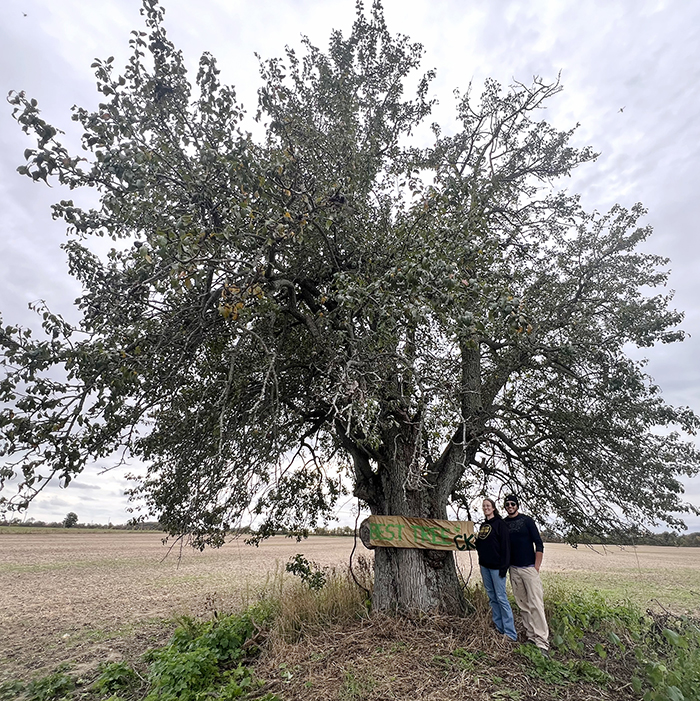
Like the people of North Buxton, the community’s historic pear is still standing.
Believed to be more than 120 years old, its lacy branches have sheltered generations of local residents who have gathered beneath it beginning in 1924 to mark the hamlet’s Homecoming celebrations.
This year it was named Best Tree in Chatham-Kent by NatureCK.
Karen Dunlop, who lives on Seventh Line with husband Andrae Cutler-Robbins, nominated the tree. It grows on the farm that belonged to Cutler-Robbins’ great-great grandfather, James Robbins.
“I nominated this tree because it’s the site of the first Homecoming event here on Labour Day weekend over 100 years ago,” Dunlop said.
“The first Homecoming party was a picnic under this tree,” she added, noting the celebration has grown into an annual four-day event which attracts thousands from across the United States and Canada.
Originally, the gathering provided an opportunity for Black residents who had left Buxton following the American Civil War, a chance to return home to reconnect with family and friends to share their history and heritage.
“This huge community event that is so important to us started under this tree,” Dunlop explained. “It’s huge for a fruit tree and it’s also very, very old. I’m super glad it won this year, because as you can see, it’s hollow.”
A self-described “tree nut,” Dunlop said she hopes to clone the tree in the near future.
According to historical records, the tree, known as the Jesuit pear tree, is believed to be a descendant of pear trees introduced in the region in the 1700s by missionaries from France.
NatureCK president Mike Smith, one of the judges for the contest, said the tree was picked because of its “community value to North Buxton.
“I think it speaks volumes,” Smith said. “It was nominated last year as well and we wanted to give it a shot. It’s been here for a long time and the original Homecoming picnic was held beneath it.”
The first Homecoming event was inspired by Reginald and Minnie Robbins who attended a similar celebration at Puce in 1924. With the support of the Sunshine Club, the B.M.E. Church, and the Buxton community, the event got underway the following year.