
OK, mark this one down as an “Old-man-yells-at-clouds” kind of column. I’m 61 now and I want to complain about … traffic calming.
Does any driver calm down when seeing that term? Or the results of a municipality implementing traffic-calming measures?
That’s extremely debatable.
The municipality has erected stop signs where they aren’t needed, employing a cookie-cutter approach, and thrown up the solar-powered “Too Fast” radar-controlled signage around the municipality.
I have long simmered over the poor north-south traffic routes inside Chatham. You can go east-west in about five minutes. North-south, however, is at least double that.
I know. I’m talking about First World problems and small-city issues that are nothing more than a relatively minor inconvenience. But wouldn’t it be better to improve the flow of traffic through the community? I mean, there are some pretty impatient drivers on our roads. Improved flow would calm them, wouldn’t it?
Those speed feedback/radar signs, which I’ve seen on rural roads such as Talbot Trail, and in Chatham along Indian Creek Road and Victoria Avenue for example, may encourage some to get off the gas, but I’ve seen others take it as a bit of a challenge.
According to the municipality, the signs are intended to “calm” traffic.
“Speed display devices are a preferred measure particularly for rural and urban arterial roads, to improve driver awareness and encourage drivers to obey speed limits,” municipal officials said.
When it is all said and done, there will be about 29 speed feedback signs erected around C-K at a cost of $170,000. That money comes from the traffic calming budget.
Yes, there is a traffic-calming policy and budget.
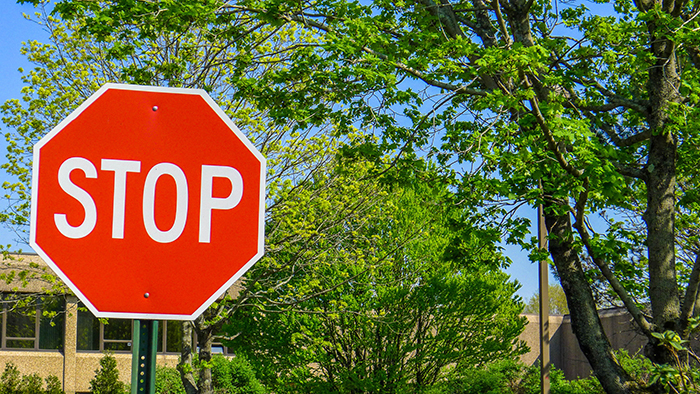
And then there are the “what the heck is that for?” stop signs. For instance, in our neighbourhood, yield signs had been in place for decades on light-traffic intersections in the subdivision. I have lived there 25 years and don’t recall seeing or hearing of a single accident at one of these intersections in that time. No need for stop signs to replace the yield signs. Yet, we have stop signs now.
According to municipal officials, that conversion idea was part of a report to council, and is an element of C-K’s Road Safety Action plan to improve safety on local roadways.
There were 239 yield-controlled intersections in Chatham-Kent, and were a mix of rural and urban. All those intersections saw yield signage swapped out for new stop signs, at a cost to taxpayers of $143,000.
I can imagine as traffic patterns evolve, there would be a need for change at certain intersections around the municipality. But for all intersections that had yield signs prior? Debatable.
Don’t even get me going on all the unnecessary four-way stops in place around Chatham-Kent. I’m talking about intersections where traffic patterns on the secondary street at that intersection do not have the traffic flow to warrant a four-way stop.
These are political stop signs – signs put in place by council after complaints from area residents about traffic flow.
I see multiple ones near where we live, and around Chatham. Why is there a stop sign on Orangewood Boulevard at Paxton Drive? Or on Orangewood at Hedge Maple Path? On Victoria Avenue at Amelia Street? Sylvestre Drive at Daleview Crescent or Sylvestre at Avon Avenue? The traffic flow along the side streets does not warrant these signs.
People living nearby might say it helps keep vehicles from going too fast along the main roads at these intersections. But other groups beg to differ.
According to the Injury Lawyers of Ontario, “Local residents often support the idea of creating four-way stops because they believe they force traffic to slow down and are therefore safer, but they actually often cause accidents…”
The association also states they can increase noise and emissions pollution as cars accelerate away from the intersection.
And they are NOT good at traffic calming, something on which the municipality is purportedly trying to improve.
Impatient drivers – again something that C-K has in abundance – are simply irked by unnecessary stop signs on major commuter roads. According to a report from the City of Topeka in Kansas, “There is no real evidence to indicate that stop signs decrease the overall speed of traffic. Impatient drivers view the additional delay caused by unwarranted stop signs as ‘lost time’ to be made up by driving at higher speeds between stop signs. Unwarranted stop signs breed disrespect by motorists who tend to ignore them or only slow down without stopping.”
Is there a perfect solution? Not at all. Imagine putting in teeth-jarring speed bumps all over the place. Or, gasp, roundabouts.
There is no simple answer, but I do believe the municipality should instead look at matters on a case-by-case basis rather than breaking out the cookie-cutter.